What Is Pond Scum? Causes, Types, and How to Get Rid of It
Oct 26th 2026

Oct 26th 2026
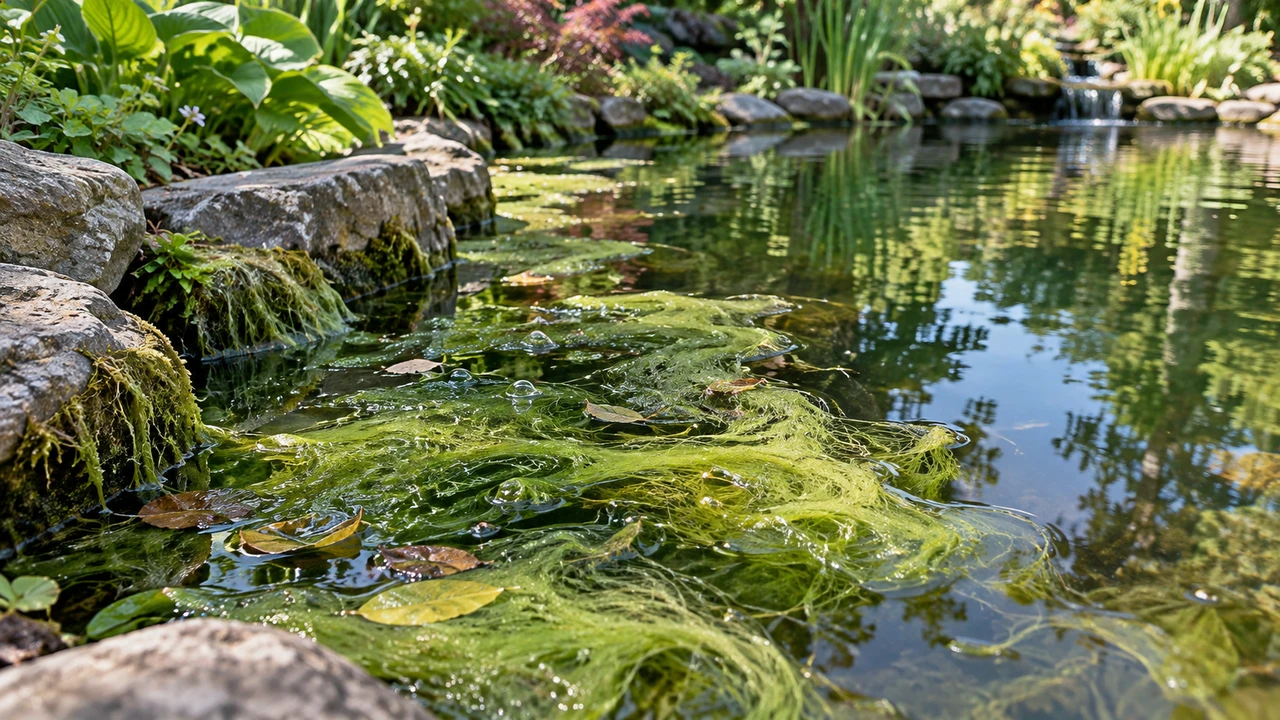
A green mat drifts across your pond. A dusty film gathers near the skimmer. Long strands cling to the waterfall rocks. You might call it all pond scum, but those materials don’t always have the same cause or need the same cleanup.
Pond scum is a general term for unwanted buildup on a pond’s surface, most commonly floating algae mats. Pond owners also use it to describe pollen, organic debris, and surface film.
Getting your pond back into good shape starts with identifying what you’re seeing. Once you know whether you’re dealing with algae, floating plants, or accumulated debris, you can remove the buildup and address what’s helping it return.
Pond scum commonly refers to filamentous algae, which grows in long, hair-like strands. These strands can attach to rocks, pond edges, and other submerged surfaces before forming tangled clumps or floating mats.
Some mats begin underwater. As algae grow, gases become trapped within the strands and lift portions toward the surface. That’s why a pond can develop floating green clumps even when the growth started below the waterline. Penn State Extension describes this growth pattern in its
The term doesn’t identify every substance collecting on the water. A thin layer of pollen requires a different response from attached string algae or tiny floating plants.
Bottom sludge is another related concern. It usually remains beneath the water, but accumulated organic material can contribute to the conditions that support algae growth.
Dealing with sludge beneath the surface? Sludge Bomb from Fitz’s Fish Ponds contains beneficial bacteria and enzymes formulated to help break down fish waste, decaying plant material, and organic muck on the pond bottom.
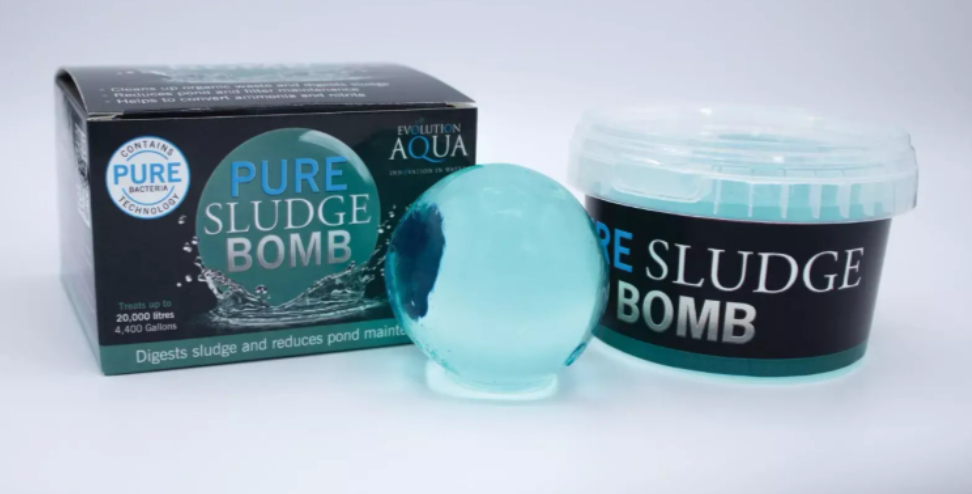
These convenient, water-soluble packs support routine sludge management, debris removal, and filtration care. Follow the product label for dosing based on your pond’s volume.
Pond scum is often algae, but surface buildup can come from several sources.
Leaves, grass clippings, pollen, and uneaten fish food may collect wherever surface movement is limited. Small floating plants can also spread across the pond and resemble a continuous green layer.
Duckweed, for example, consists of tiny floating plants rather than tangled strands of algae. Green water is different: microscopic algae suspended throughout the water can affect its color without forming a mat you can lift with a net.
A thin film may involve pollen or naturally occurring organic material. An unusual oily sheen could also come from other sources, including contamination, so don’t assume every shiny surface is harmless.
Look at the material’s texture, whether it forms strands, and whether individual leaves are visible. If you’re unsure, talk to a pond expert before selecting a treatment.
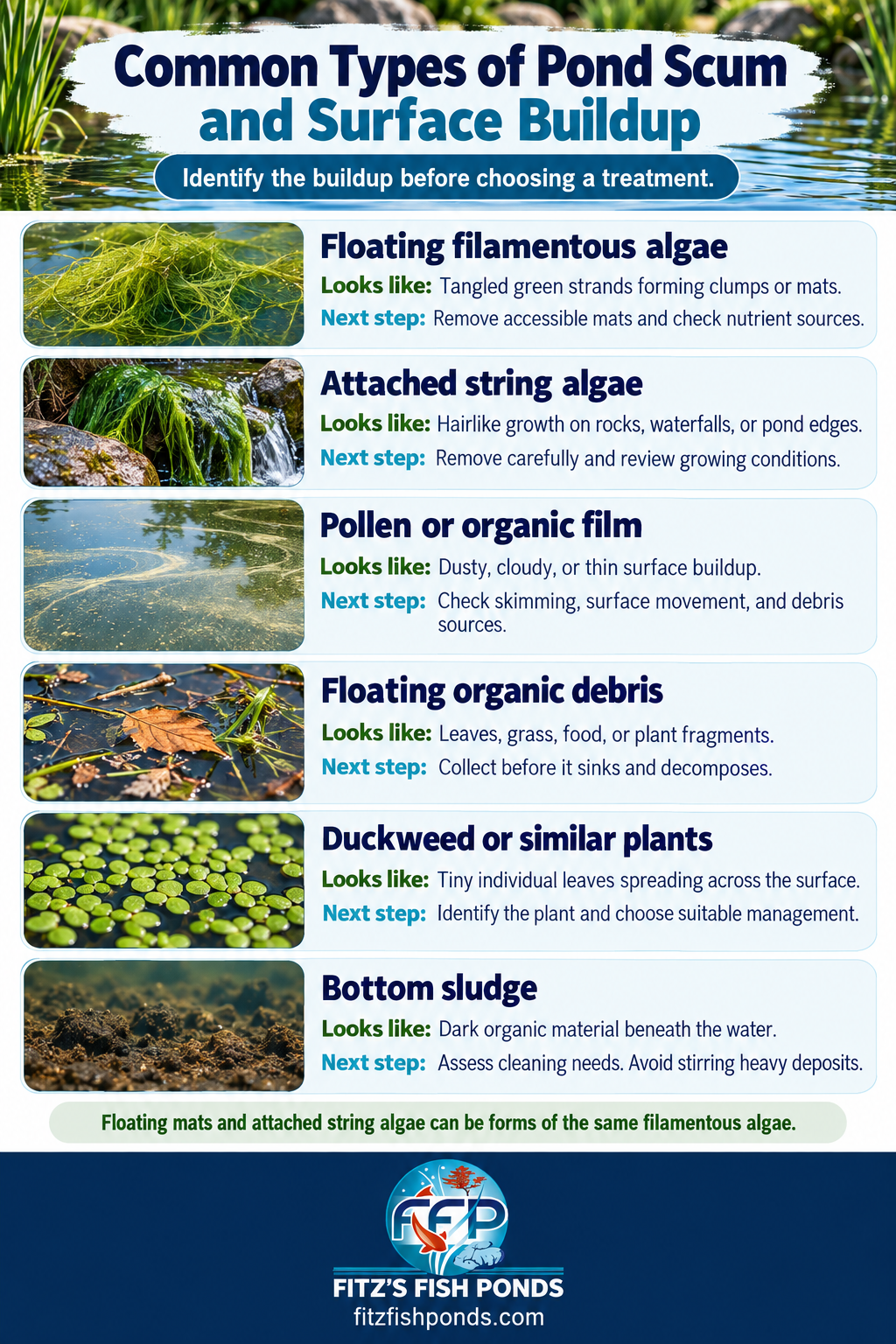
Several different materials can make a pond look untidy. This table offers a starting point for identifying them.
|
Material |
What it may look like |
Best next step |
|
Floating filamentous algae |
Tangled green strands forming clumps or mats |
Remove accessible mats and investigate nutrient sources. |
|
Attached string algae |
Hairlike growth on rocks, waterfalls, or pond edges |
Remove carefully and review the conditions supporting growth. |
|
Pollen or organic film |
Dusty, cloudy, or thin surface accumulation |
Check skimming, surface movement, and nearby debris sources. |
|
Floating organic debris |
Leaves, grass, food, or plant fragments |
Collect material before it sinks and decomposes. |
|
Duckweed or similar plants |
Tiny individual leaves spreading across the surface |
Identify the plant and use a suitable management approach. |
|
Bottom sludge |
Dark organic material beneath the water |
Assess cleaning needs and avoid aggressively disturbing heavy deposits. |
Floating mats and attached string algae aren’t necessarily separate kinds of algae. They can represent different growth forms of filamentous algae. Our related article on what to do about string algae explains this problem in more detail.
Some dense blooms deserve extra caution. Cyanobacteria, often called blue-green algae, can resemble spilled paint or thick surface scum. Appearance alone can’t tell you whether toxins are present. Keep people and pets away from a suspected harmful bloom and seek assessment rather than treating it as ordinary string algae.
Algae growth and surface accumulation often develop through a combination of nutrient availability, seasonal conditions, and maintenance needs.
Fish waste, uneaten food, and decomposing vegetation add organic material to the pond. Fertilizer runoff can introduce additional nutrients after rain. Sunlight and warm conditions can then encourage algae growth.
Surface debris may also collect when a skimmer basket is full or equipment flow drops. A clogged pump intake or neglected mechanical filter can reduce performance and leave material gathering in quiet areas.
Common contributors include:
Poor circulation can allow floating material to accumulate, but moving water doesn’t prevent every algae problem. String algae can grow on waterfall rocks and around flowing water. Aeration and circulation support pond care, while nutrient management and appropriate maintenance address other parts of the problem.
A little algae doesn’t automatically mean your pond is unhealthy. Algae is part of aquatic ecosystems, and some growth is expected.
Heavy growth deserves closer attention. Dense mats can interfere with equipment, cover large areas, and change oxygen conditions. Decomposing algae and organic debris also consume oxygen.
This becomes especially relevant during treatment. Killing a large amount of algae at once leaves more material to decay, potentially increasing demand on the pond’s oxygen supply. Penn State identifies oxygen depletion as a concern when controlling abundant aquatic growth.
Watch your fish and the water. Gasping at the surface, sudden behavior changes, or fish deaths call for prompt assessment. Check aeration and equipment performance, and obtain appropriate water testing and professional support. Clear-looking water doesn’t prove oxygen levels or water chemistry are suitable.
Effective cleanup combines removing visible material with correcting its source. Start with manageable steps before reaching for a treatment.
Identify the buildup first.
Check whether you’re seeing strands, individual floating leaves, loose debris, or a thin film. An algae product won’t necessarily address floating plants or contamination. Suspected harmful blooms need a different response from ordinary debris removal.
Remove accessible mats and floating debris.
Use a suitable pond net to collect loose algae, leaves, and plant fragments. Work carefully around fish and aquatic plants, and remove collected material from the pond area so it can’t wash back in.
Avoid aggressively stirring heavy bottom sludge. If deposits are substantial, professional cleaning may be more appropriate than trying to rake everything loose.
Check skimmers, pumps, and filters.
Empty collection baskets and inspect equipment for obstructions. Follow the manufacturer’s maintenance instructions, particularly when cleaning biological filter media.
The goal is to restore flow while preserving the biological filtration your pond depends on. Repeatedly stripping the system clean can create additional water-quality problems.
Review aeration and circulation.
Check that pumps and aerators are operating properly. Equipment changes may help when the pond has inadequate oxygen support or areas where surface material continually collects.
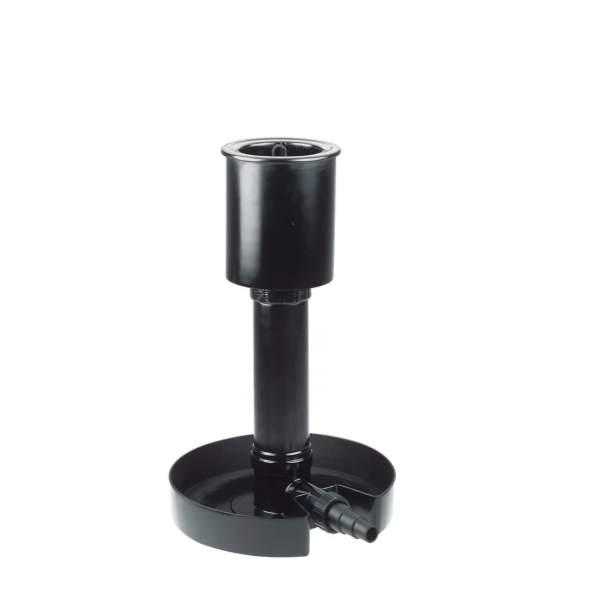
A pond surface skimmer such as the Oase AquaSkim In-Pond Surface Skimmer can collect leaves, pollen, and other floating debris before they sink. It won’t remove every attached strand of algae or replace other maintenance.
Reduce nutrient inputs.
Remove dying plant material, correct overfeeding, and investigate runoff after rain. Review whether the filtration system can accommodate the pond’s fish load.
Removing algae while keeping the same nutrient sources often leads to another round of cleanup.
Consider beneficial bacteria where appropriate.
Some pond bacteria and enzyme treatments are formulated to support organic-waste management. Choose products suited to your pond and follow their instructions. For ongoing pond care, we recommend All Season Liquid Bacteria, formulated to help reduce organic muck and support clearer water. Use it alongside regular debris removal and filtration maintenance, following the label’s directions for your pond’s volume and water conditions.
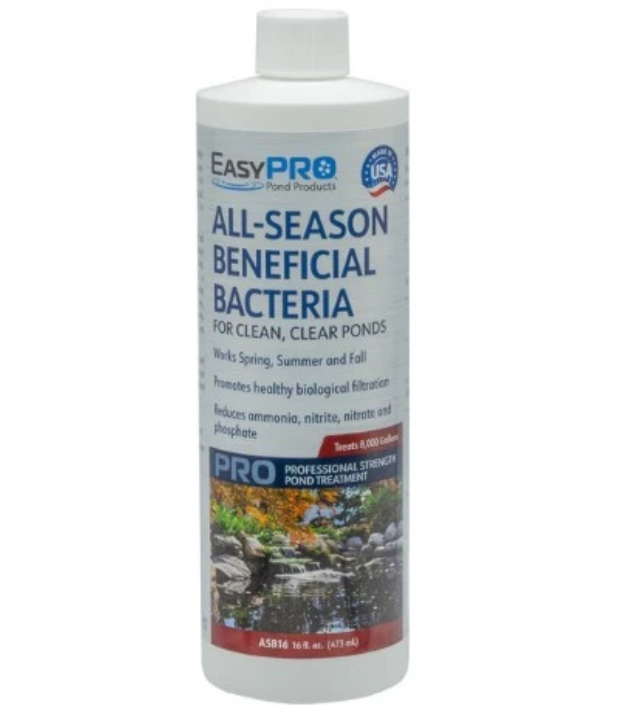
Results vary. These additives aren’t an instant solution for established algae mats or a replacement for a functioning filtration system.
Treat active algae only when needed.
For confirmed string algae or floating algae mats, we advise using ALGAECIDE by Aquascape.
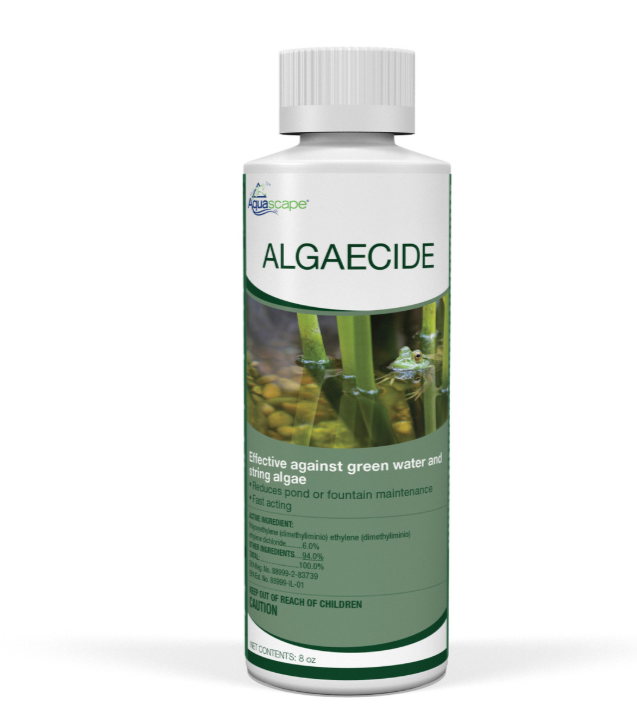
Or you can explore Fitz’s Fish Ponds’ pond water treatments and choose a product suited to your pond’s volume, fish, plants, and water conditions. Follow all label instructions, including dosing and aeration requirements, and remove dead algae so it doesn’t accumulate and decay.
Don’t assume every product is compatible with every fish, plant, or existing treatment. Heavy infestations may need a staged approach directed by product instructions or a pond professional.
Continue observing fish behavior, equipment flow, and water quality after cleanup.
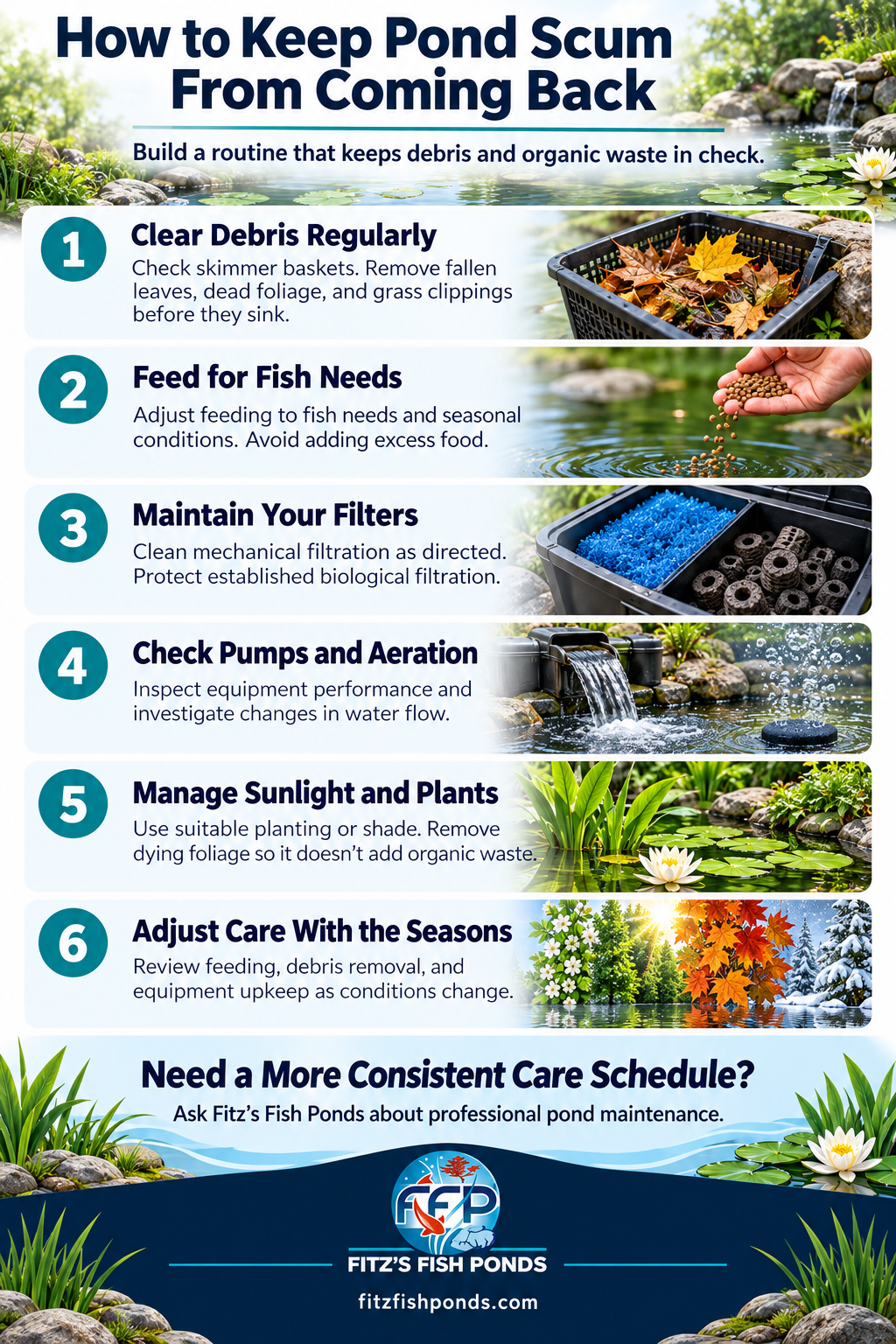
Prevention starts with a repeatable care routine. Small amounts of debris are easier to manage before they sink, decay, and accumulate.
Check skimmer baskets regularly, especially during leaf fall or heavy pollen periods. Remove dead foliage and keep grass clippings out of the water. Feed according to fish needs and seasonal conditions, not just because fish gather near you.
Maintain mechanical filtration and protect established biological filtration. Check pump performance, inspect aeration equipment, and investigate flow changes.
Appropriate aquatic planting or shade may help manage sunlight, but plants need care too. Dying foliage left in the pond adds organic material.
Seasonal changes can require adjustments to feeding, debris collection, and equipment maintenance. A routine that works in spring may need more attention during summer heat or autumn leaf fall.
If upkeep is difficult, professional pond maintenance can provide a more consistent schedule.
Occasional debris or a small patch of algae may be manageable through routine care. Recurring heavy buildup suggests the pond needs a closer assessment.
Contact a professional when scum repeatedly returns, equipment flow remains poor, sludge is substantial, or odor accompanies declining clarity. Extensive coverage and signs of fish distress also deserve prompt attention.
Fitz’s Fish Ponds can help assess cleaning and maintenance needs, filtration performance, and suitable next steps. Our pond cleaning services offer a service path for ponds needing more extensive attention.
Suspected contamination or harmful blooms may also require environmental testing or specialist guidance. Avoid choosing a treatment based solely on a photograph when the material is uncertain. Got questions or need help? Talk to an Expert or call us at (908) 420-9908.
Is pond scum the same as string algae?
The terms often overlap. String algae is filamentous algae that can form attached strands or floating mats. Pond owners also use “scum” to describe pollen, debris, and surface film, so identification comes first.
Do beneficial bacteria remove pond scum?
Suitable products may support organic-waste management, but results depend on pond conditions and product selection. They don’t physically remove algae mats and shouldn’t replace debris removal, filtration care, or nutrient management.
Will a pond skimmer remove algae mats?
Skimmers collect floating debris and may capture some loose algae. Dense mats and attached string algae often need careful manual removal. Keep baskets clear so collected material doesn’t restrict flow.
Why does pond scum keep coming back?
Persistent nutrient inputs, decomposing vegetation, overfeeding, runoff, or equipment problems can continue supporting growth. Cleanup needs to address those conditions, not just the visible material.
Can pond scum harm koi?
Heavy algae growth and decomposition can reduce oxygen. Unusual blooms may present other risks. Monitor fish behavior and seek help if koi gasp, become unusually inactive, or show sudden changes.
Should I drain my pond to remove scum?
Surface buildup alone doesn’t automatically require draining. Start with identification, careful removal, and equipment checks. Heavy sludge or broader maintenance problems may warrant professional cleaning with proper fish handling.
| Hours | |
|---|---|
| sunday | 10:00 AM - 4:00 PM |
| monday | Closed |
| tuesday | 10:00 AM - 5:00 PM |
| wednesday | 10:00 AM - 5:00 PM |
| thursday | 10:00 AM - 5:00 PM |
| friday | 10:00 AM - 5:00 PM |
| saturday | 10:00 AM - 5:00 PM |
| Hours | |
|---|---|
| sunday | 10:00 AM - 5:00 PM |
| monday | Closed |
| tuesday | 11:00 AM - 6:00 PM |
| wednesday | 11:00 AM - 6:00 PM |
| thursday | 11:00 AM - 6:00 PM |
| friday | 11:00 AM - 6:00 PM |
| saturday | 10:00 AM - 5:00 PM |
| Hours | |
|---|---|
| sunday | Closed |
| monday | 10:00 AM - 4:00 PM |
| tuesday | 10:00 AM - 4:00 PM |
| wednesday | 10:00 AM - 4:00 PM |
| thursday | 10:00 AM - 4:00 PM |
| friday | 10:00 AM - 4:00 PM |
| saturday | Closed |
| Hours | |
|---|---|
| sunday | 10:00 AM - 4:00 PM |
| monday | Closed |
| tuesday | 10:00 AM - 5:00 PM |
| wednesday | 10:00 AM - 5:00 PM |
| thursday | 10:00 AM - 5:00 PM |
| friday | 10:00 AM - 5:00 PM |
| saturday | 10:00 AM - 5:00 PM |
| Hours | |
|---|---|
| sunday | Closed |
| monday | Closed |
| tuesday | 10:00 AM - 5:00 PM |
| wednesday | 10:00 AM - 5:00 PM |
| thursday | 10:00 AM - 5:00 PM |
| friday | 10:00 AM - 5:00 PM |
| saturday | 10:00 AM - 5:00 PM |
| Hours | |
|---|---|
| Sunday | Closed |
| Monday | Closed |
| Tuesday | 10:00 AM - 5:00 PM |
| Wednesday | 10:00 AM - 5:00 PM |
| Thursday | 10:00 AM - 5:00 PM |
| Friday | 10:00 AM - 5:00 PM |
| Saturday | 10:00 AM - 5:00 PM |
| Hours | |
|---|---|
| Sunday | 10:00 AM - 4:00 PM |
| Monday | Closed |
| Tuesday | 10:00 AM - 5:00 PM |
| Wednesday | 10:00 AM - 5:00 PM |
| Thursday | 10:00 AM - 5:00 PM |
| Friday | 10:00 AM - 5:00 PM |
| Saturday | 10:00 AM - 5:00 PM |